Ultra Filteration
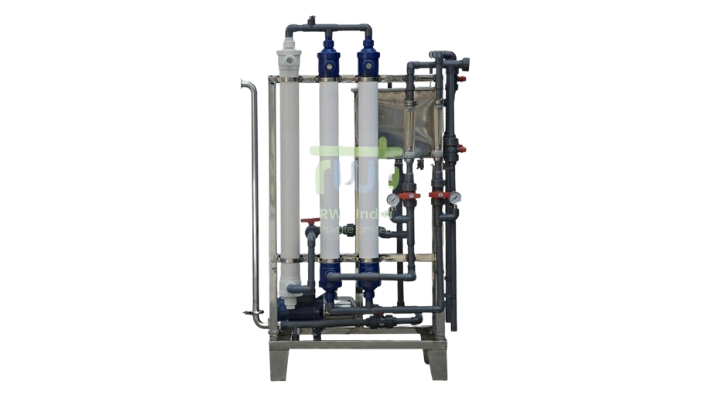
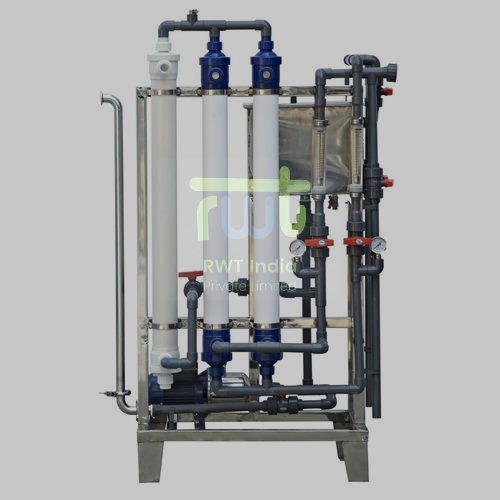
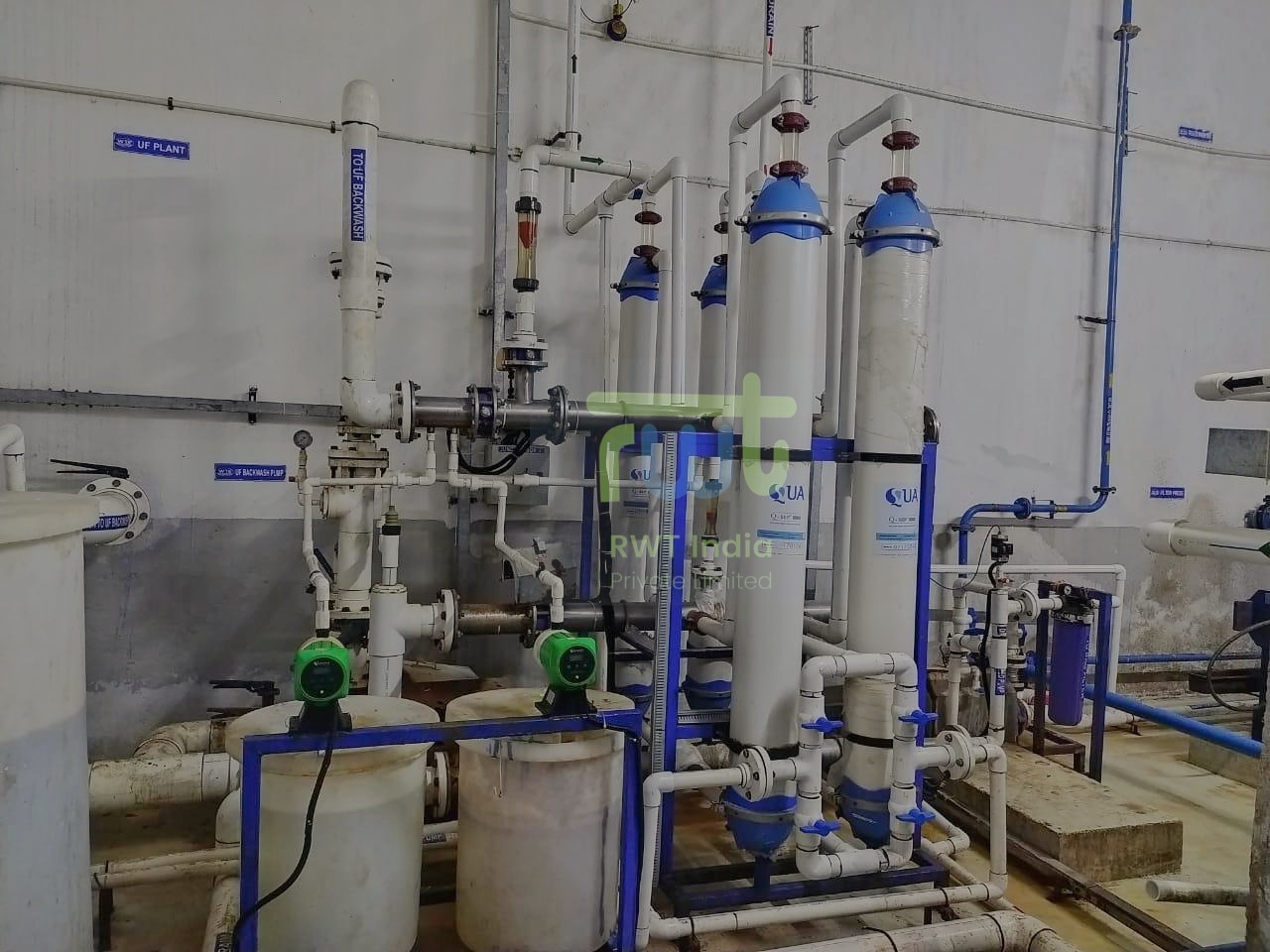
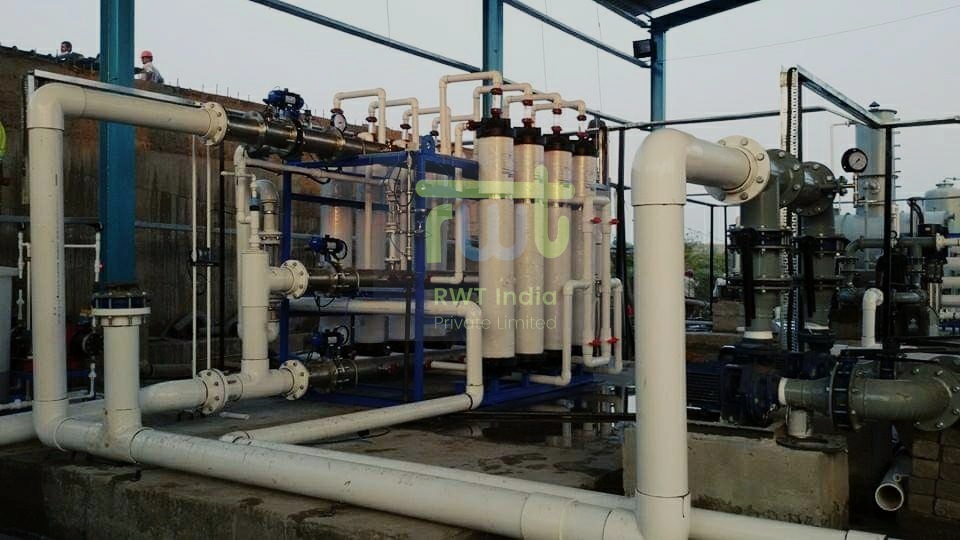
Raindrops Water Technologies offer wide range of UF systems as per customer requirement , we design Ultrafiltration plants for various applications like RO pre treatment, drinking water, ETP, STP and customised requirement.
Ultrafilter Vs. Conventional Filter :
- Ultrafiltration, like reverse osmosis, is a cross-flow separation process. Here liquid stream to be treated (feed) flows tangentially along the membrane surface, thereby producing two streams. The stream of liquid that comes through the membrane is called permeate. The type and amount of species left in the permeate will depend on the characteristics of the membrane, the operating conditions, and the quality of feed. The other liquid stream is called concentrate and gets progressively concentrated in those species removed by the membrane. In cross-flow separation, therefore, the membrane itself does not act as a collector of ions, molecules, or colloids but merely as a barrier to these species.
- Conventional filters such as media filters or cartridge filters, on the other hand, only remove suspended solids by trapping these in the pores of the filter-media. These filters therefore act as depositories of suspended solids and have to be cleaned or replaced frequently. Conventional filters are used upstream from the membrane system to remove relatively large suspended solids and to let the membrane do the job of removing fine particles and dissolved solids. In ultrafiltration, for many applications, no prefilters are used and ultrafiltration modules concentrate all of the suspended and emulsified materials.
Factors Affecting The Performance Of Ultrafiltration :
- There are several factors that can affect the performance of an ultrafiltration system. A brief discussion of these is given here.
- Flow Across the Membrane Surface: The permeate rate increases with the flow velocity of the liquid across the membrane surface. Flow velocity if especially critical for liquids containing emulsions or suspensions. Higher flow also means higher energy consumption and larger pumps. Increasing the flow velocity also reduces the fouling of the membrane surface. Generally, an optimum flow velocity is arrived at by a compromise between the pump horsepower and increase in permeate rate.
- Operating Pressure: Permeate rate is directly proportional to the applied pressure across the membrane surface. However, due to increased fouling and compaction, the operating pressures rarely exceed 100 psig and are generally around 50 psig. In some of the capillary-type ultrafiltration membrane modules the operating pressures are even lower due to the physical strength limitation imposed by the membrane module.
- Operating Temperature: Permeate rates increase with increasing temperature. However, temperature generally is not a controlled variable. It is important to know the effect of temperature on membrane flux in order to distinguish between a drop in permeate due to a drop in temperature and the effect of other parameters.